
Home › Guides › Doors on the flats
Guide
Doors on the flats.
Old Wyong sits about 2.2 metres above sea level on the Wyong River flood plain, in coastal air that stays humid most of the year and a district that takes well over a metre of rain annually. None of that is drama; it's just the ground the doors live on. But it means a garage door here ages from the bottom up, and knowing that changes how you look after one.
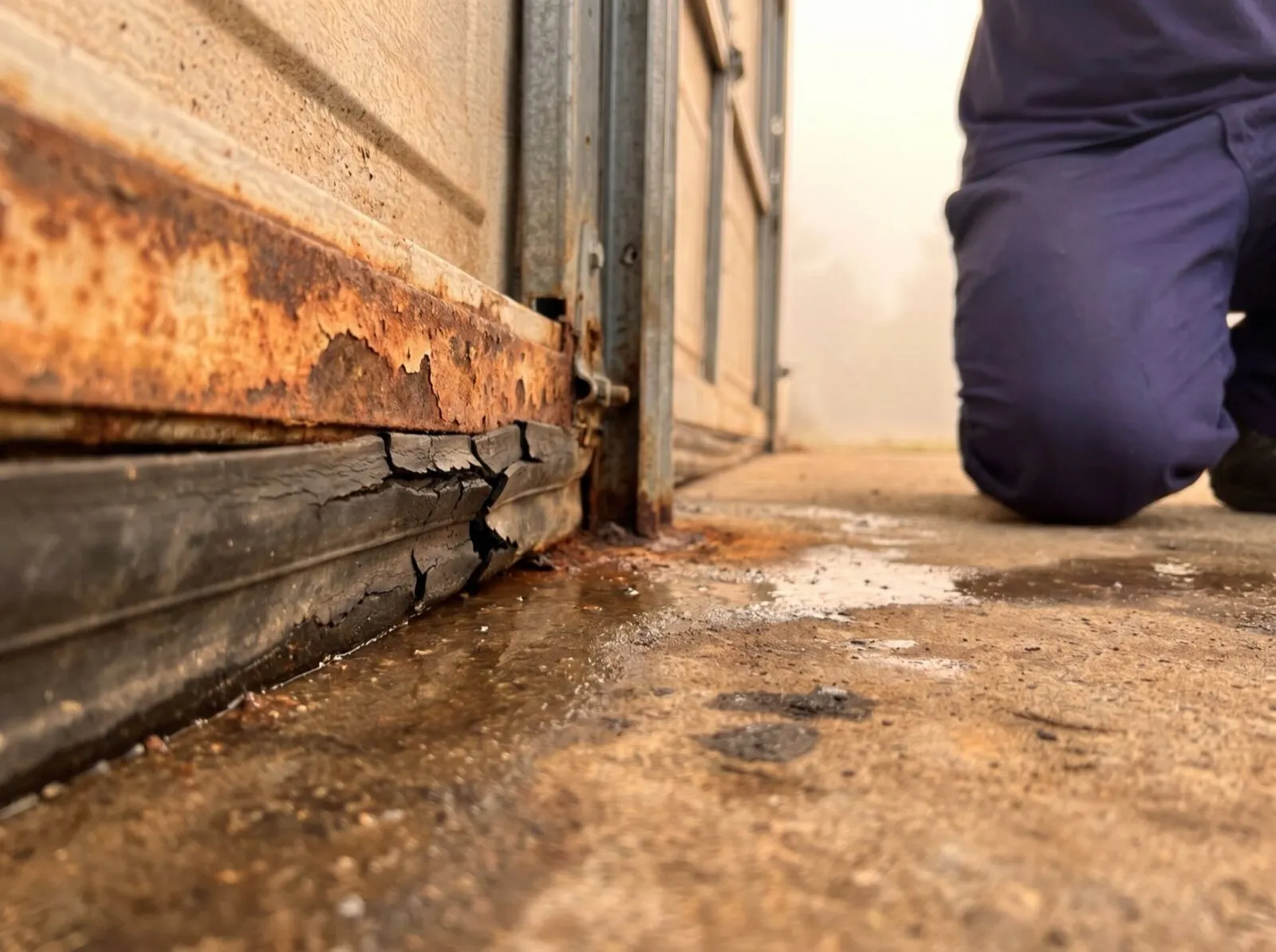
Damp works at ankle height
Water doesn't attack a door evenly. It pools on the slab, wicks into the lowest steel, and hangs in the air of a closed garage long after the driveway has dried. So the wear map of a flats door is always the same, bottom first:
- The bottom rail. The lowest horizontal steel on the door catches splash, condensation and whatever the seal lets through. Surface rust here is near-universal on older doors; rust through here is the classic end of a flats door.
- The track feet. Where the vertical tracks meet the slab, fixings and feet corrode first. A rusted foot lets the track flex, and a flexing track is how rollers start jumping.
- The bottom seal. Rubber perishes faster wet-dry-wet than it ever does dry. Once the seal cracks or flattens, it stops keeping water out, and the rail behind it pays.
- Timber jambs. On older garages the door runs against timber. Swollen timber moves the geometry the door was hung to, and the door starts binding in damp weeks and freeing up in dry ones. If your door is "moody with the weather", this is usually why.
- Springs and cables in wet air. High-tension steel hates humidity. Springs on the flats fatigue and pit sooner than the same spring inland, which is why we check them at every service rather than waiting for the bang.
The five-minute look you can do this weekend
No tools, no ladder, nothing under tension. Open the door, and:
- Run your eye (not your fingers) along the bottom rail: surface bloom is normal on an older door; flaking, bubbling or holes are not.
- Look at where each track meets the floor: white or orange crust around the fixings means the feet are corroding.
- Bend a corner of the bottom seal gently: it should flex like rubber, not crack like biscuit.
- Look at the bottom corners of the door for daylight when it's closed: gaps mean the seal or the slab profile has moved.
- Listen on one full cycle: a new grind or a catch at the same spot every time is a wear point announcing itself.
Anything on that list is worth an enquiry; none of it is worth panic. Doors fail slowly here, then suddenly. The whole point of looking is to stay in the slow part.
What a service actually does about it
A flats-minded service is mostly about the bottom of the door: seals replaced before they let go, rails and feet cleaned back and protected, fixings checked, tracks re-anchored if the feet have moved, everything lubricated with the right product for wet air rather than whatever's in the shed. Then balance and tension, because a door that runs true loads its lowest parts least. It's unglamorous work, and it's the difference between a flats door lasting fifteen years or twenty-five.
When damp has already won
Rust through the bottom rail or the curtain's lower ribs is structural, and structural rust doesn't repair; it only relocates the next failure. That's the honest line into the fix-or-replace conversation, and it's the one situation where we'll tell an old-Wyong owner to stop spending on a door. When we do, we'll show you the perforation itself, at the door, so you're deciding on evidence rather than a pitch.
The honest limit, stated plainly: a garage door seal keeps out weather, draughts and pests. It will not hold back a flooded driveway, and on a flood plain nobody should tell you otherwise. Flood behaviour is a property question, not a door product.
Sources & further reading
- Bureau of Meteorology: climate data online. The district's rainfall and humidity records, for anyone who wants the numbers behind "damp coastal air".
- Central Coast Council. The local authority for flood-plain mapping and property flood information in the Wyong district.
Bottom of your door telling a story?
Rust, seals, swollen jambs, a door that's moody with the weather: it's the most local work we do, and the earlier it's looked at, the cheaper the story ends.