
The old town
Garage doors in Wyong: repair first.
The old shire seat, with the racetrack in the middle of town and the river running through it. A lot of Wyong's doors went up decades ago and they've earned some respect: our first instinct here is to fix, and if a door genuinely owes you nothing, we'll say that instead of dressing it up.
What the flats do to a door
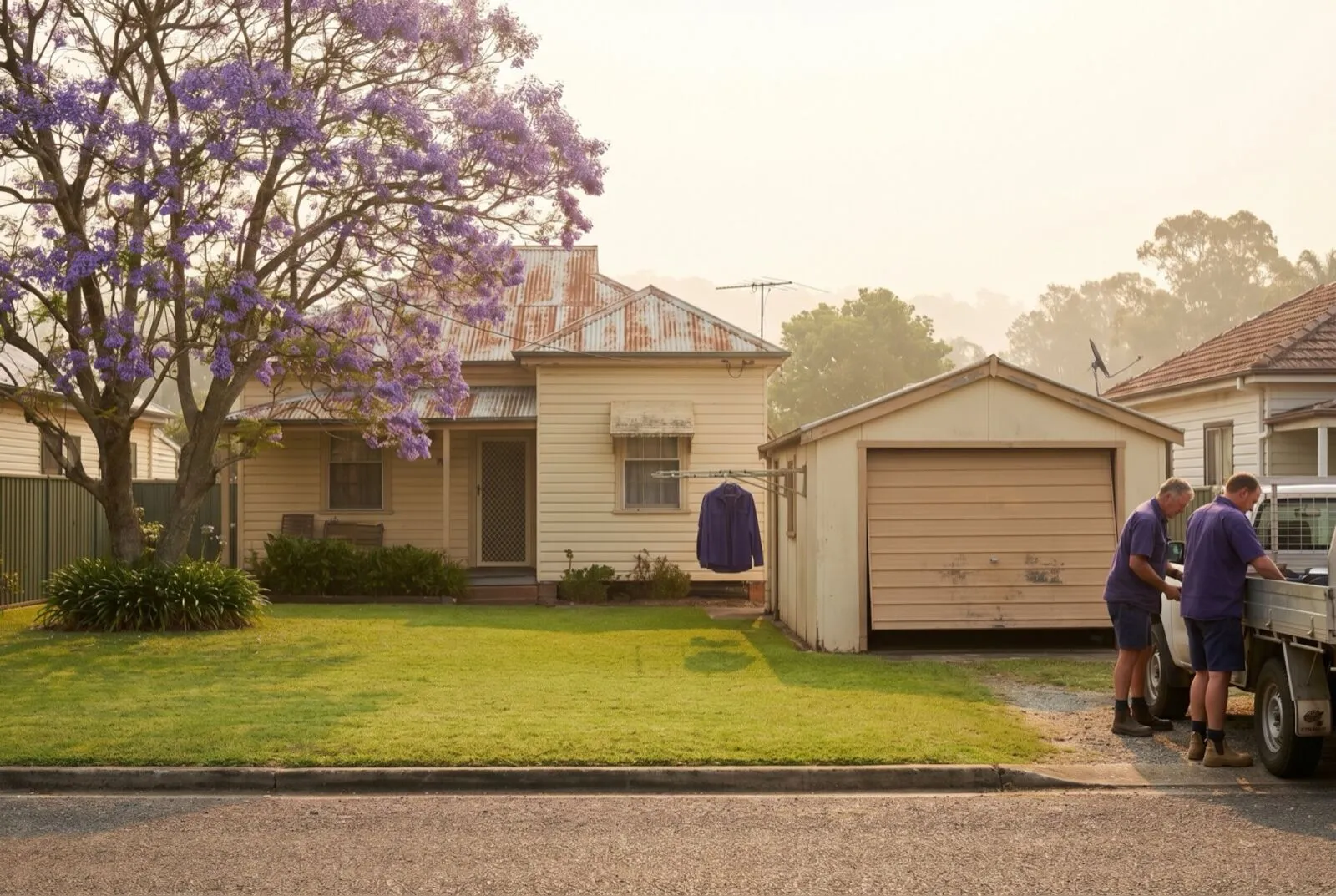
Wyong sits at about 2.2 metres above sea level on the Wyong River flood plain, in air that stays damp most of the year. That's not disaster talk, it's just the ground the doors live on, and it shapes the faults we see. Damp works at ankle height: surface rust blooming on the bottom rail, track feet corroding where they meet the slab, bottom seals perishing early, timber jambs swelling until the door binds against them, and springs wearing faster in wet air than the same spring would inland.
None of that is dramatic on any given day. Over ten years it's the difference between a door that runs and a door that's "always been a bit heavy". We wrote the full picture up in Doors on the flats, including what to look for at the bottom of your own door this weekend.
Fix versus replace, said straight
This is the conversation that matters most in old Wyong, so here's how we actually run it. A snapped spring on a sound door is a repair, full stop; nobody should be quoted a new door for a spring. A tired tilt door with a solid panel and worn pivots is usually still a repair. But a door whose bottom rail has rusted through, whose panel has sagged out of square, and whose parts went out of production years ago: that door owes you nothing, and the honest advice is to stop spending on it.
Fix it if it's worth fixing. Say so plainly if it isn't. Nobody gets upsold at the door.
The fix-or-replace guide walks through the same call we make on site, with worked examples, so you can see which side of the line your door is likely on before anyone visits.
The track, and the fringe beyond it
The racecourse on Howarth Street has been part of town since 1875, and it's a working place, not a postcard: stables, floats, feed sheds and the trades that keep a course precinct running. Out past it through Mardi and Tacoma, and up to Jilliby, the blocks stretch into acreage and the doors get taller: machinery sheds, float bays, high roller doors where the question "will it fit through?" is meant literally. That whole conversation lives in the shed door and float clearance guide.
Wyong by the numbers
| Addresses (G-NAF) | 3,577 |
|---|---|
| Dwellings that are units or flats | 42.8% |
| Elevation at the town centre | 2.2 m |
| Distance to Tuggerah | 3.6 km |
Address count from G-NAF (Geoscape, via data.gov.au); dwelling mix from the ABS Census. That 42.8% matters for door work: a big slice of Wyong lives behind roller doors in unit blocks and villas, with tight headroom and body-corporate gates, and we handle those too.
A Wyong door playing up?
Tell us what it's doing and where you are. A fault gets a call-out and a price at the door before any work; an old door gets an honest verdict, whichever way it falls.